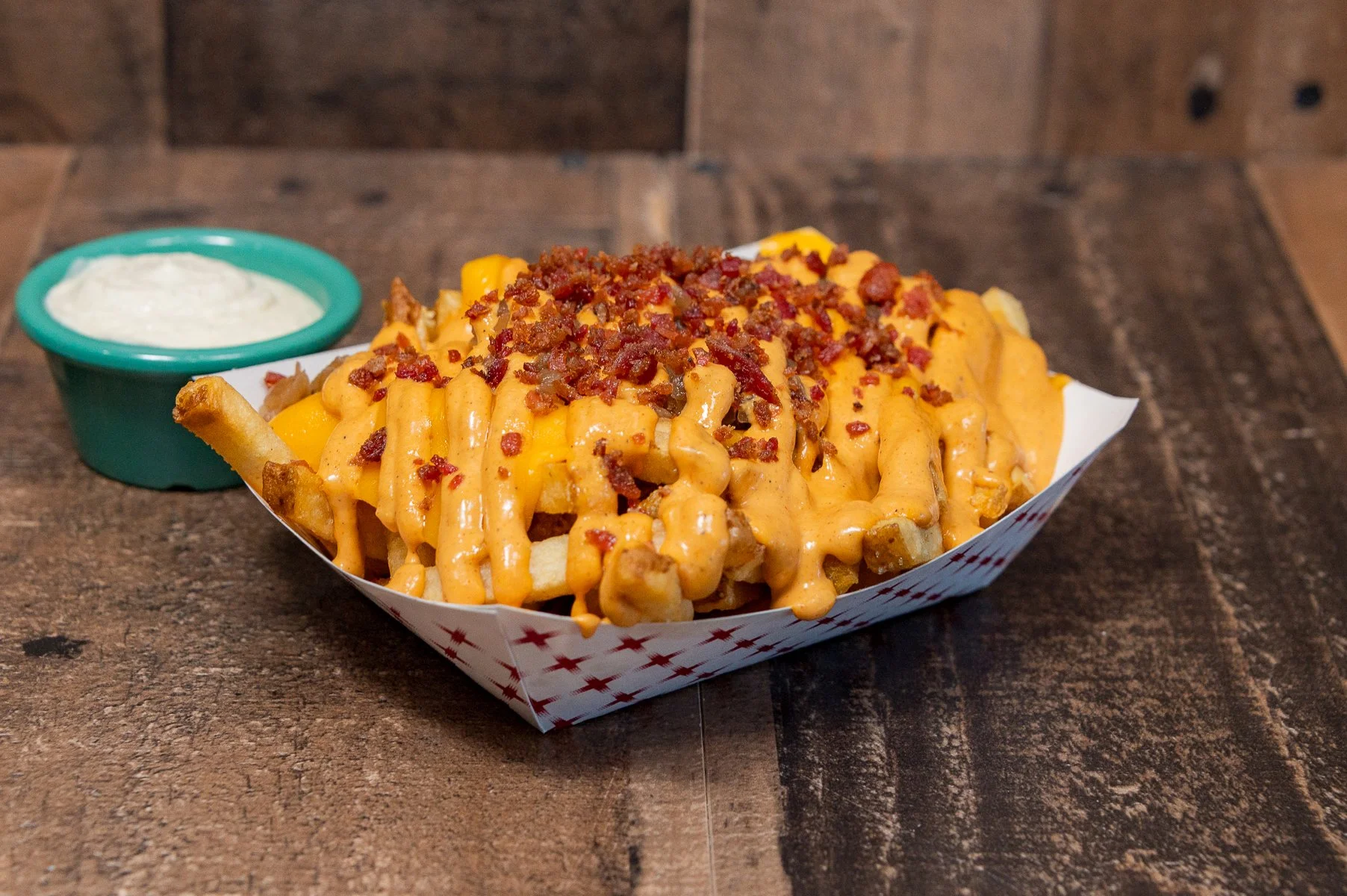
The Fry That Started a Conversation
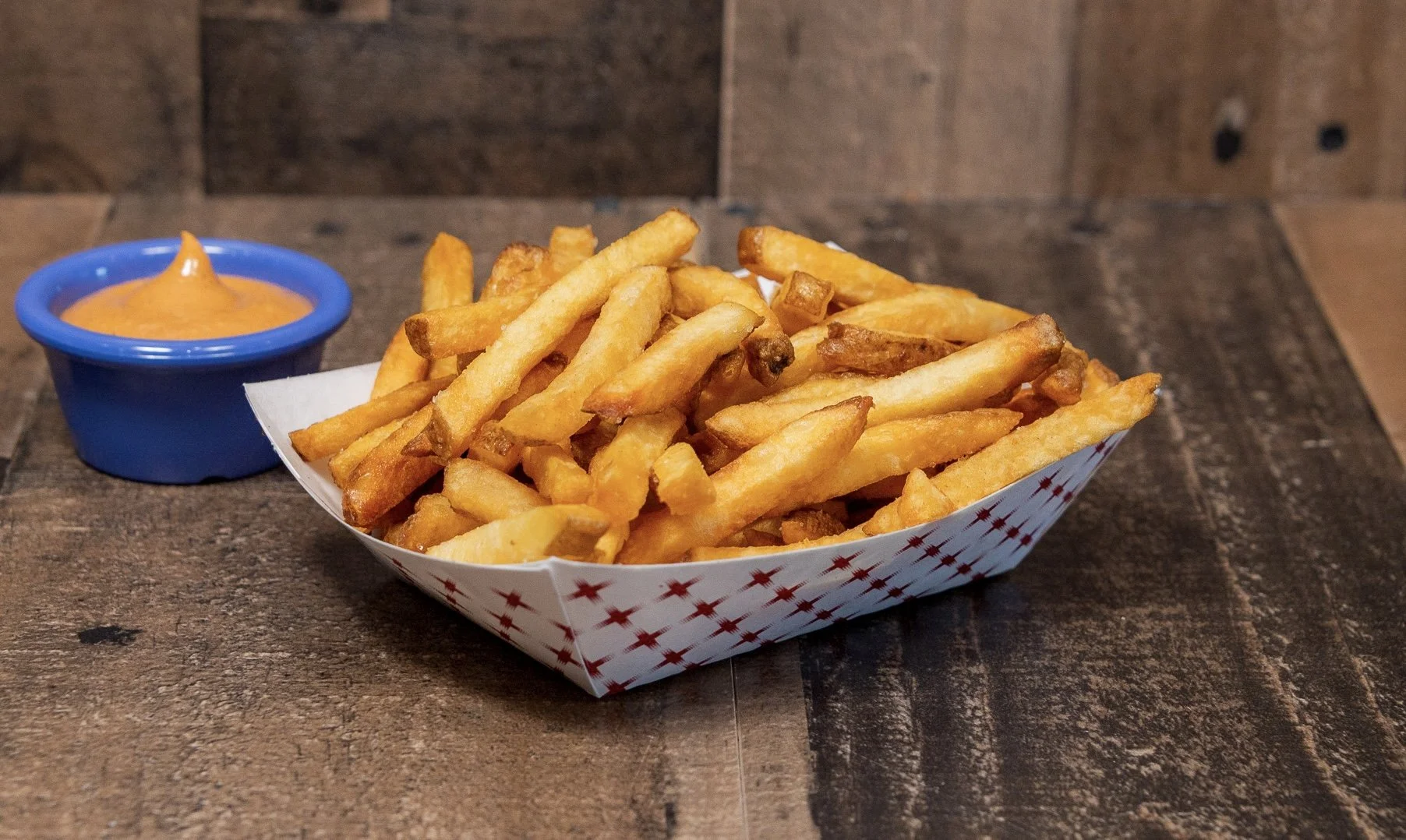
There's something that happens when a customer takes their first bite of our fries. They pause. Sometimes they look at the fry. Sometimes they look at us. And then they ask the question we love hearing: "What do you cook these in?"
The Answer: Beef tallow.
Every time, without fail, that answer leads somewhere interesting — because most people haven't heard of tallow, or if they have, they've heard the wrong things about it. So let's talk about it.
What Is Tallow, Anyway?
Tallow is rendered beef fat — the same fat that's naturally present in the beef we already eat. It's not a new invention or a wellness trend. It's actually one of the oldest cooking fats in the world, used for generations before industrial seed oils came along and quietly replaced it in most restaurant kitchens during the 20th century.
Old-school diners swore by it. Your great-grandmother probably had a can of it on the stove. Then it got quietly replaced by vegetable shortening, canola oil, and soybean oil — not because those were better for us, but because they were cheaper and easier to store.
We think it's worth looking at what we lost when that switch happened.
Why We Cook in Tallow
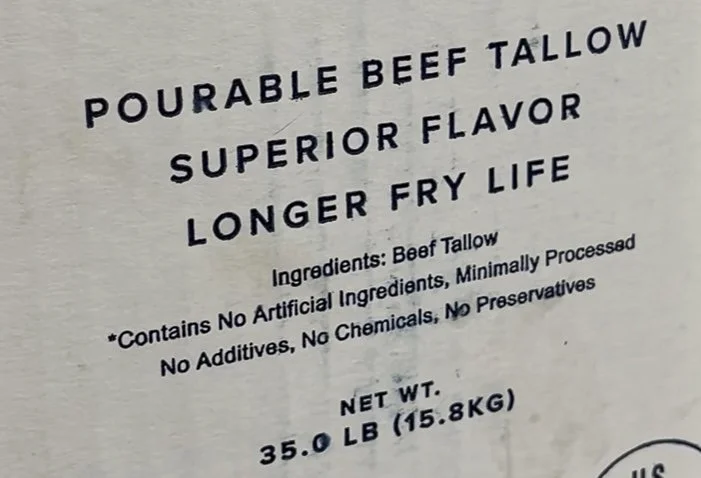
Our fries are cooked twice — par-fried first, then finished to order — entirely in 100% beef tallow. No seed oils, no blended fats, nothing else. That double-fry process creates the crunch and depth of flavor you can actually taste, but the tallow itself is doing a lot of the work.
It has a high smoke point. Tallow handles heat well, which means it stays stable at frying temperatures without oxidizing and breaking down the way many seed oils do. Oxidized oils don't just lose quality — they produce compounds that can contribute to inflammation over time. Tallow doesn't have that problem.
It's rich in fat-soluble nutrients. Beef tallow contains vitamins A, D, E, and K — nutrients that actually need fat to be absorbed by your body. It also naturally contains CLA (conjugated linoleic acid), the same beneficial fatty acid found in grass-fed beef that's linked to a number of positive health outcomes.
It's a traditional fat. There's something to be said for ingredients that have been part of the human diet for thousands of years. Our bodies recognize these fats. The same can't quite be said for highly processed polyunsaturated oils that were developed in a lab less than 100 years ago.
A Word on Seed Oils
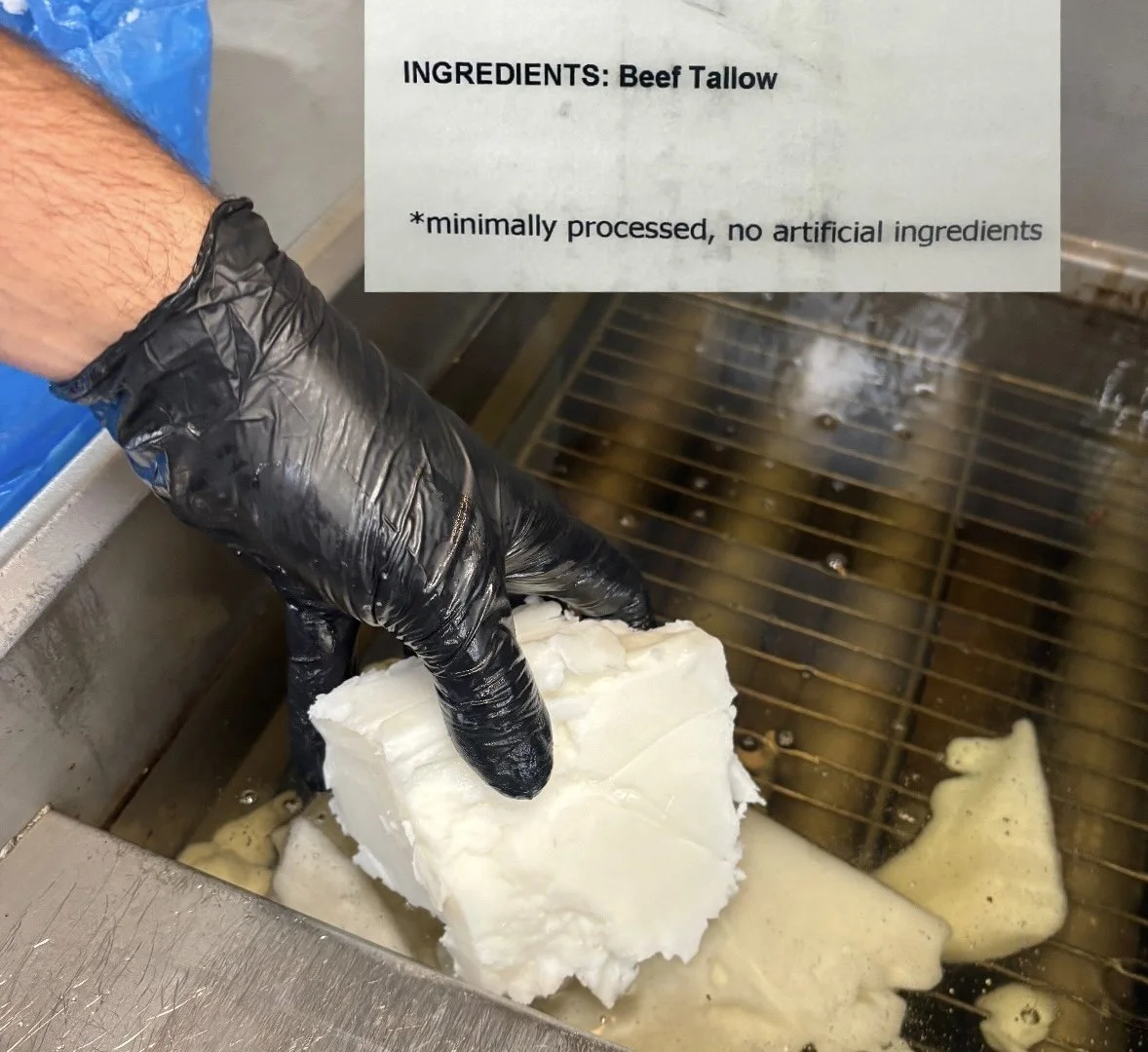
We're not here to tell anyone that the food they've been eating is poison — that's not our vibe, and honestly, the conversation is more nuanced than that. But we do think it's worth knowing that most restaurant fryers are running on oils like canola, soybean, or cottonseed — oils that are high in omega-6 fatty acids and go through significant industrial processing before they reach the fryer.
The issue isn't necessarily eating some omega-6 fat. It's the ratio. Most people today consume omega-6 and omega-3 fats at a dramatically skewed ratio compared to what human bodies have historically run on — and a lot of that comes from how often we eat foods cooked in highly processed vegetable oils. Tallow, by comparison, has a fat profile much closer to what we're naturally built to process.
That's a choice we made early on, and it's one we feel good about.
The Taste, Though
We'd be leaving something out if we only talked about health.
Tallow fries taste like fries are supposed to taste. There's a richness and depth that seed oils just don't deliver. The exterior gets genuinely crispy. The inside stays light. And there's a subtle savory quality that you can't really fake — because it's beef fat, and it belongs with beef.
If you've ever wondered why fast food fries used to taste better decades ago, this is a big part of the answer.
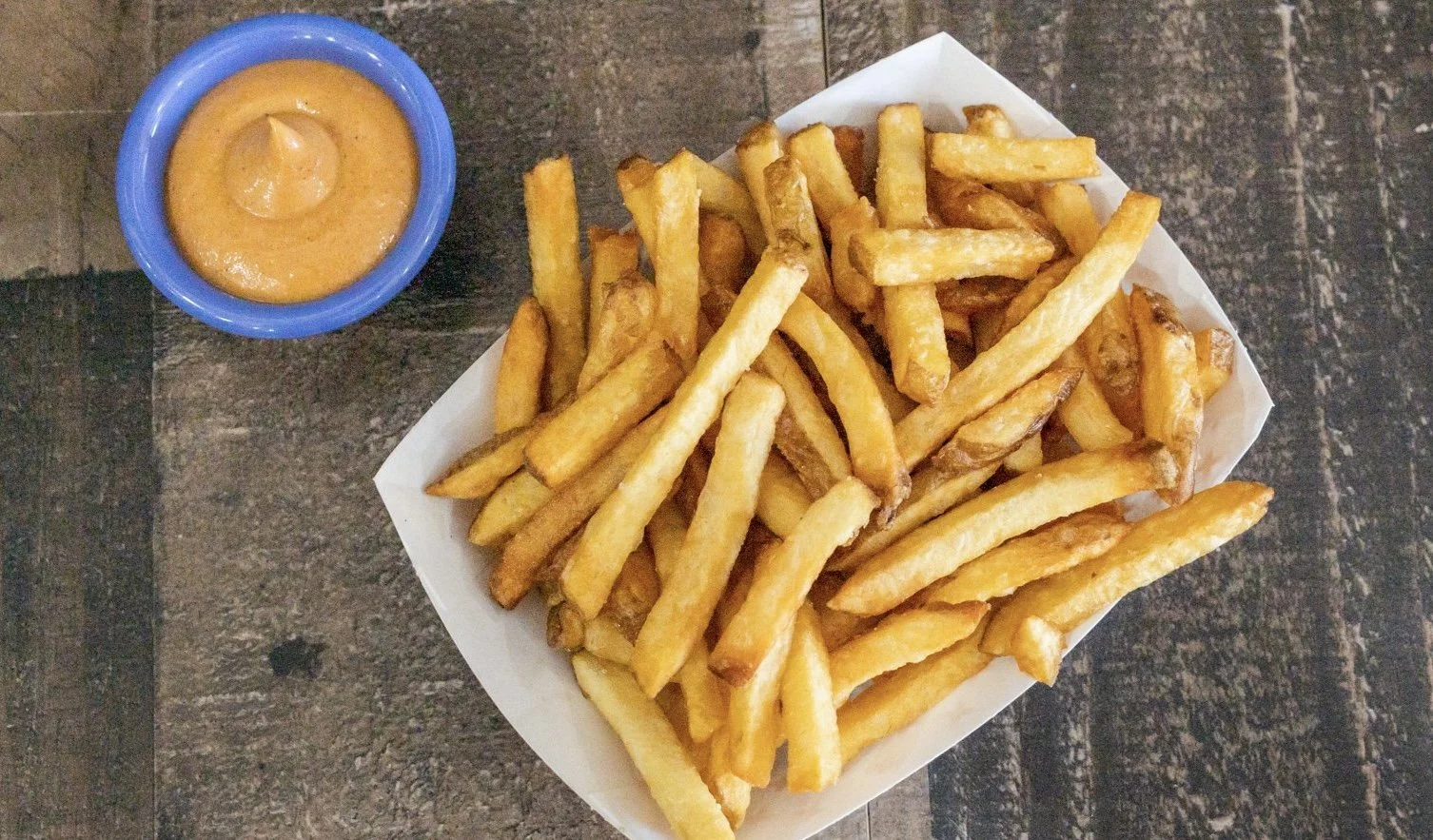
We chose tallow because it made sense — from a flavor standpoint, from an ingredient integrity standpoint, and from a "this is just how it was always done before shortcuts became the norm" standpoint. It fits with everything else we believe about food: that real ingredients, prepared thoughtfully, are hard to argue with.
Come try them. We'll let the fries speak for themselves.